Continuing Medical Education (CME) on Writing Protocol for Postgraduate Thesis


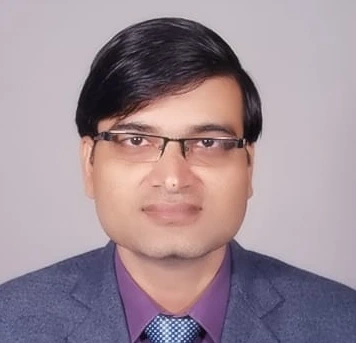
Dr Sarvesh Singh
Organising Secretary
Department of Pharmacology
U.P. Lucknow
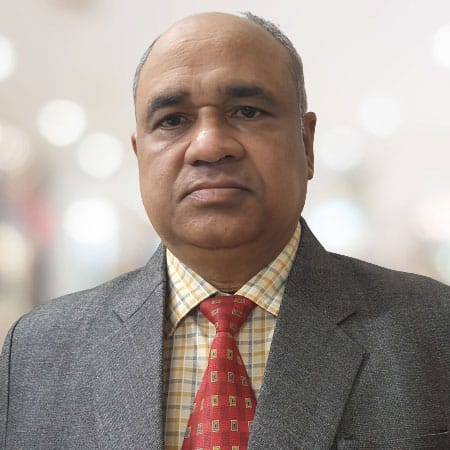
Dr Rakesh Kumar Dixit
Chairperson
Department of Pharmacology
U.P. Lucknow
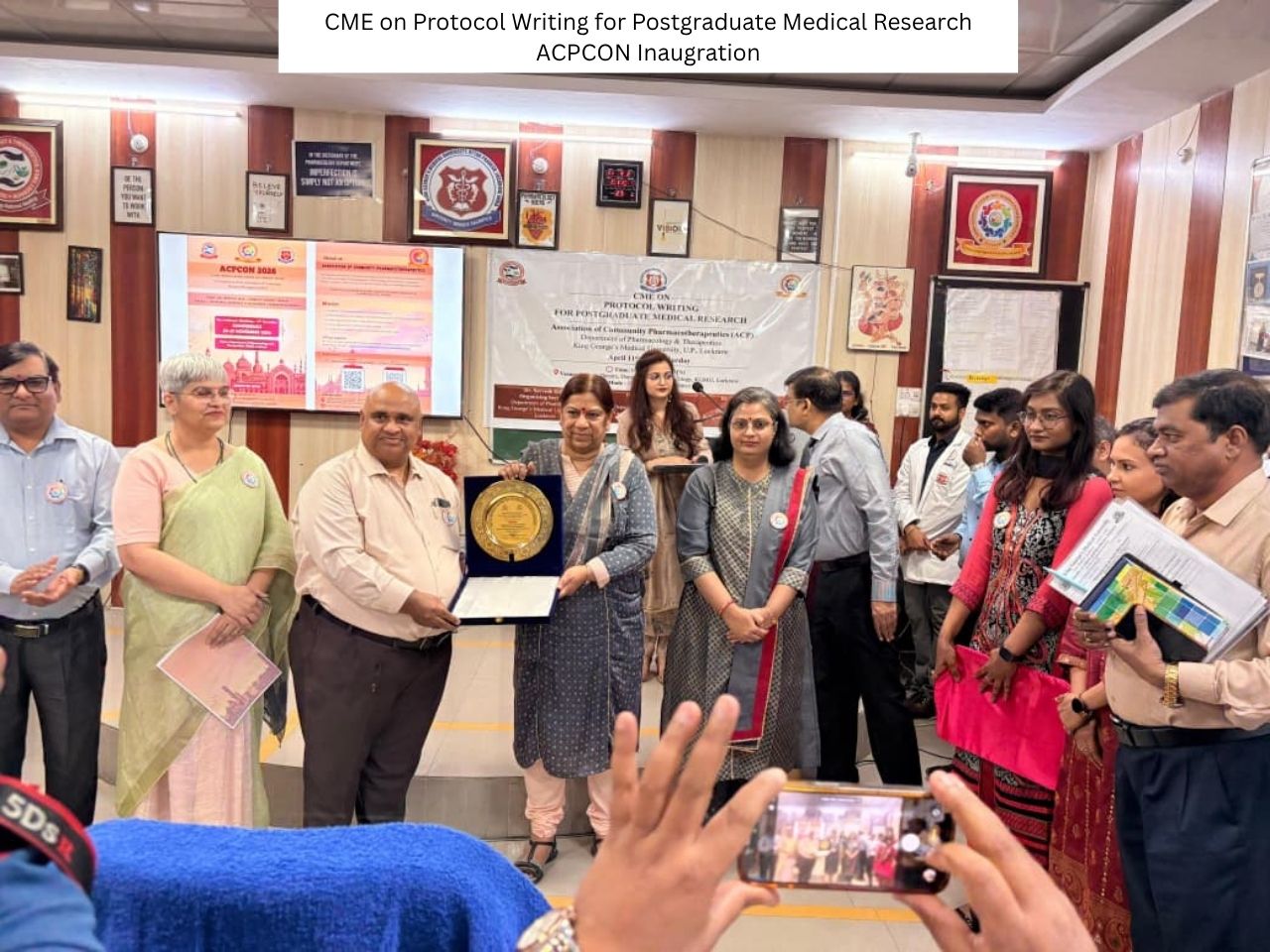
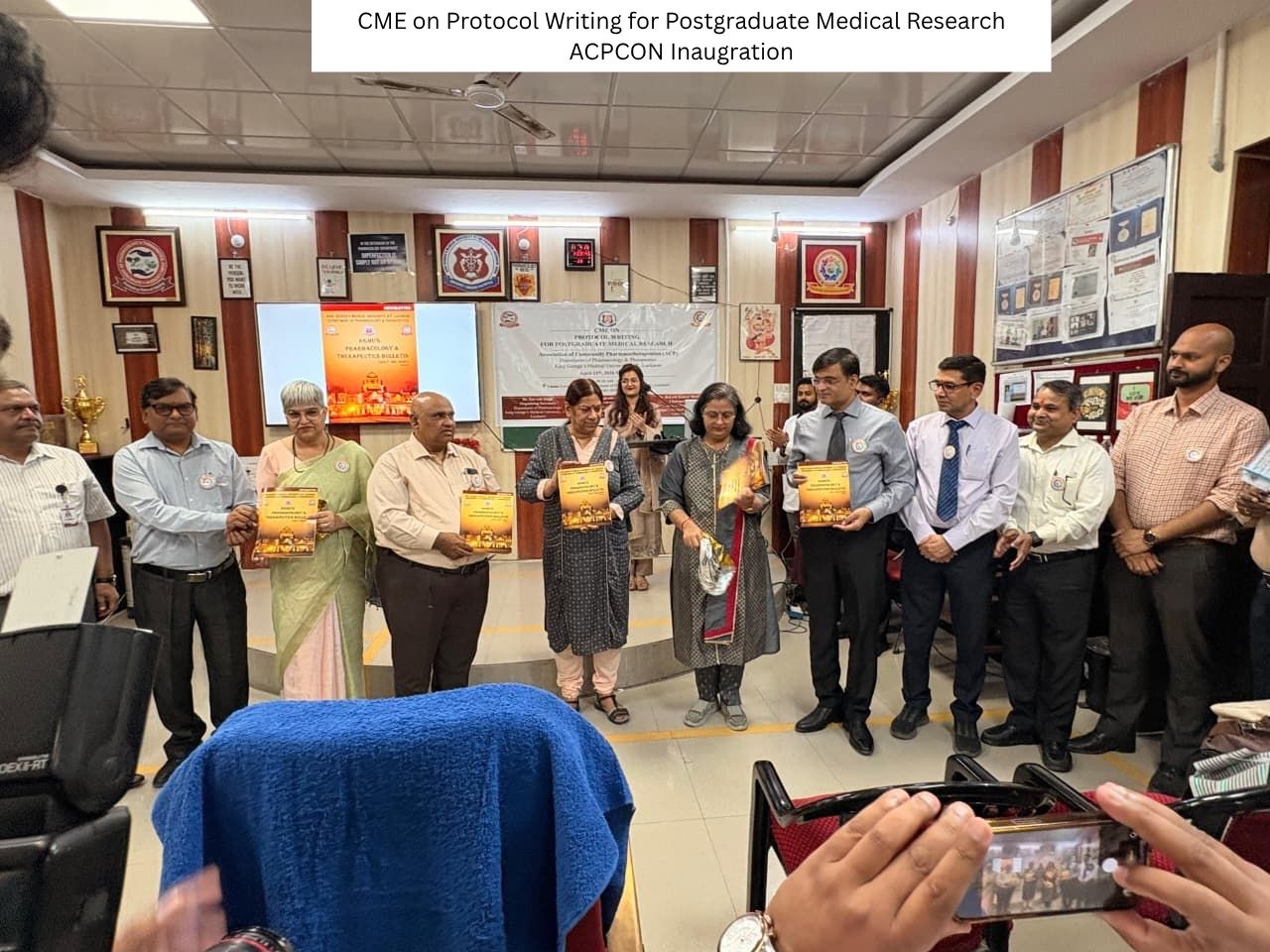
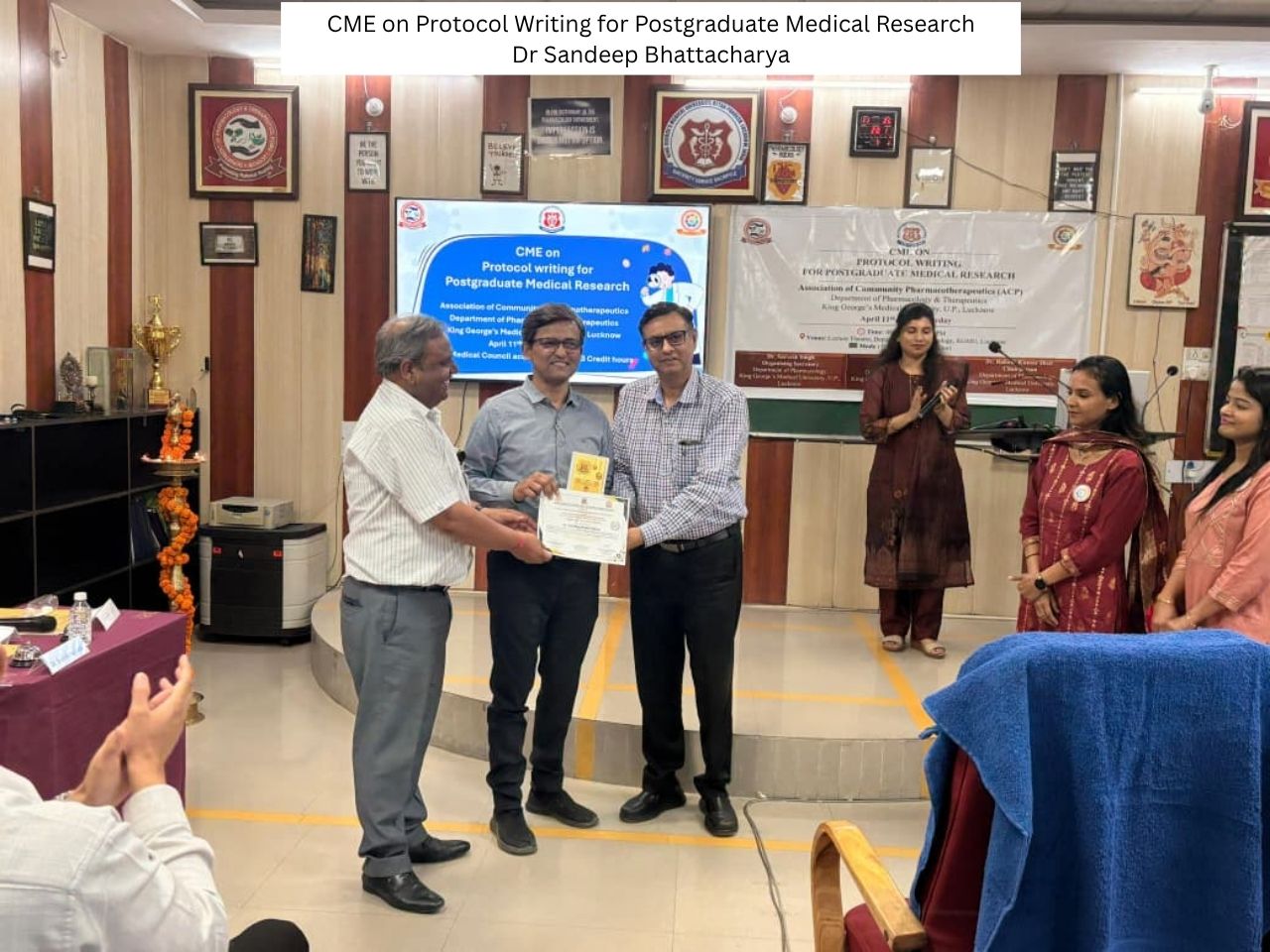
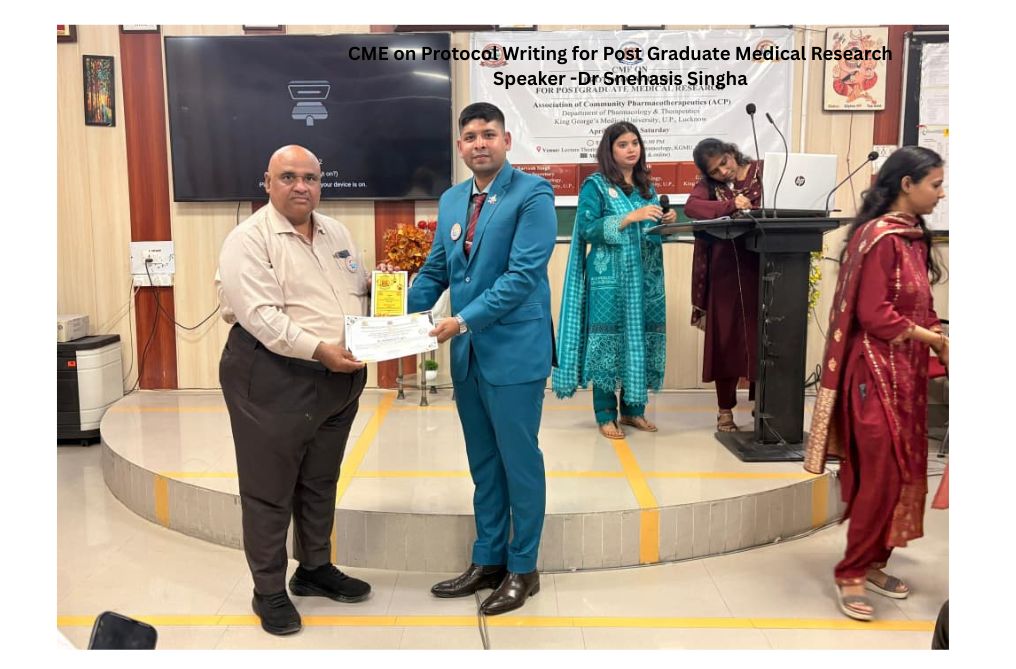
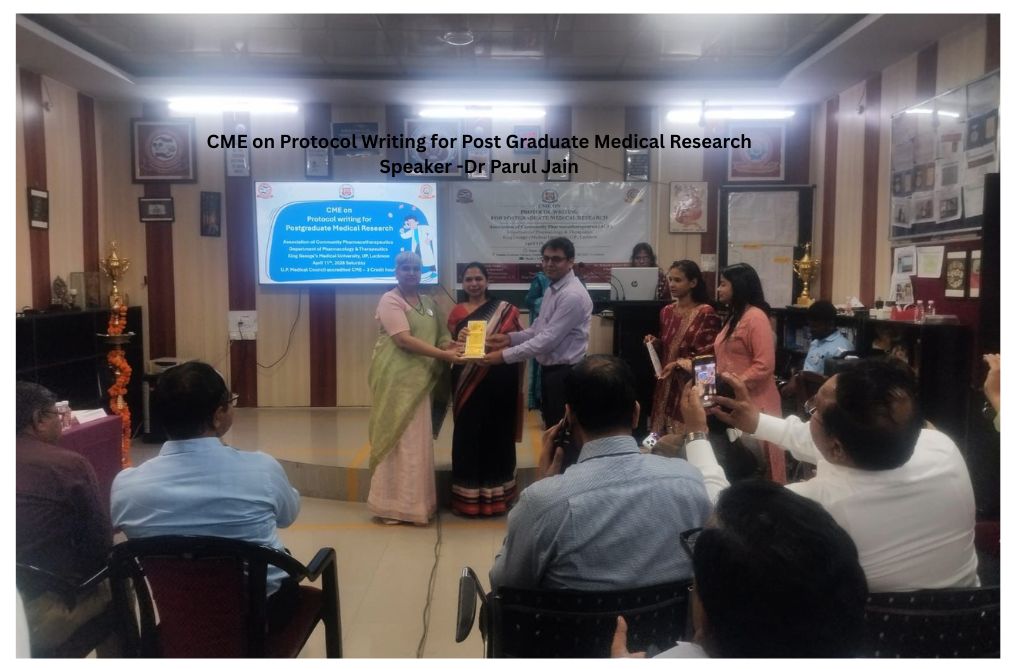
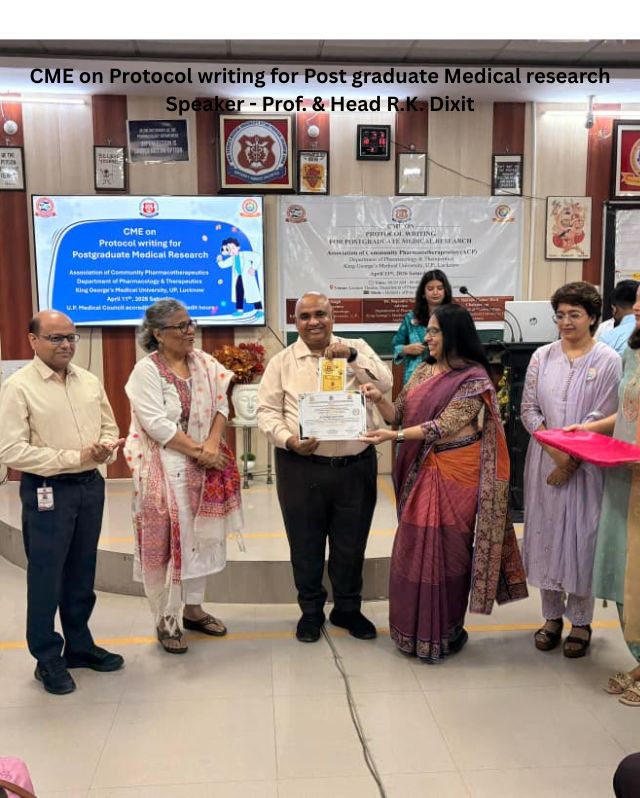
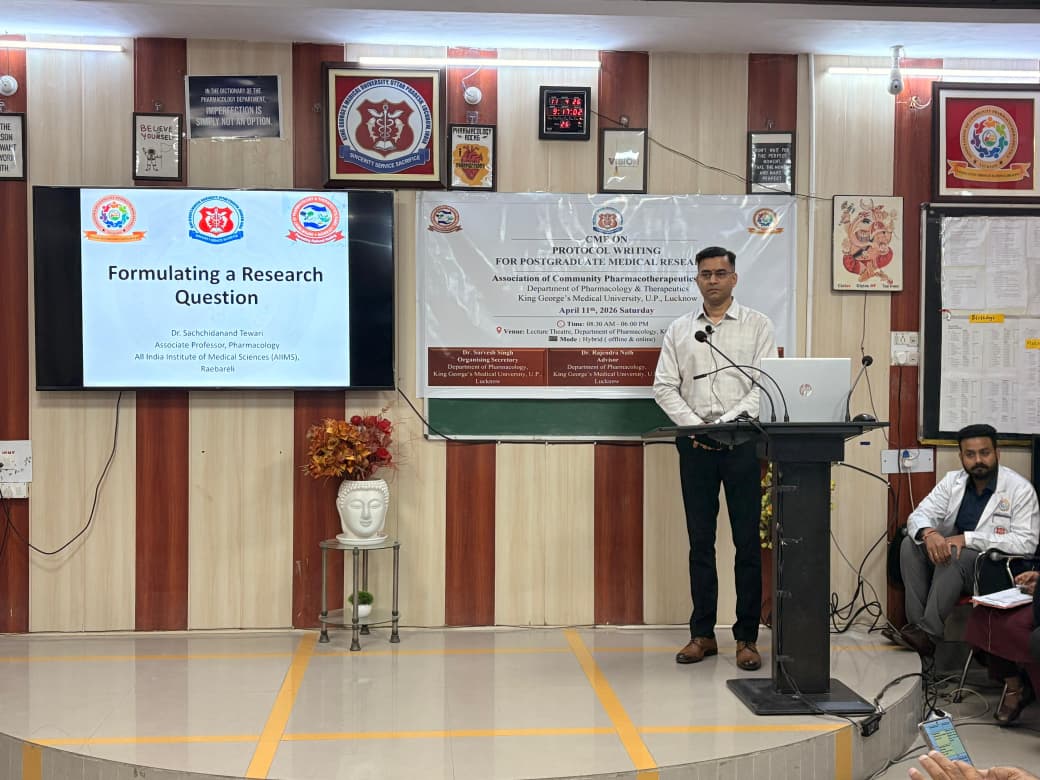
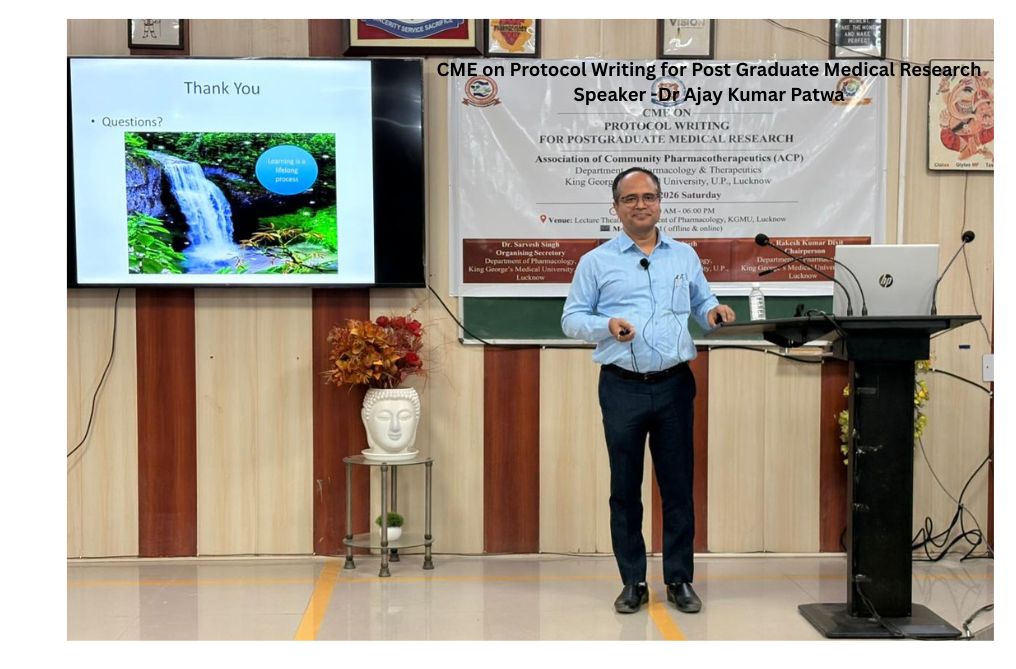
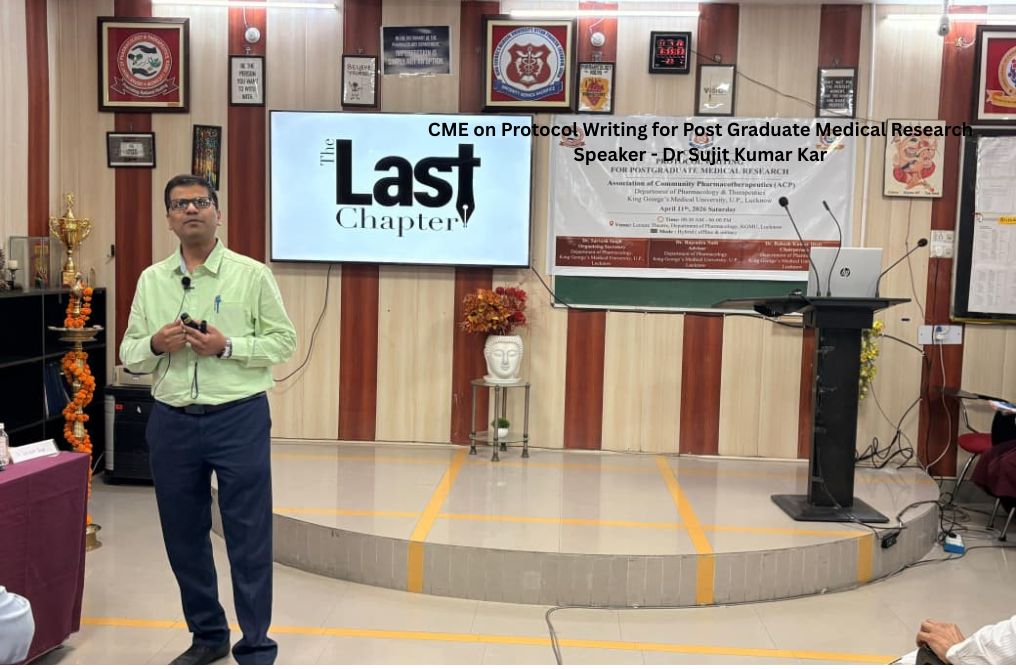
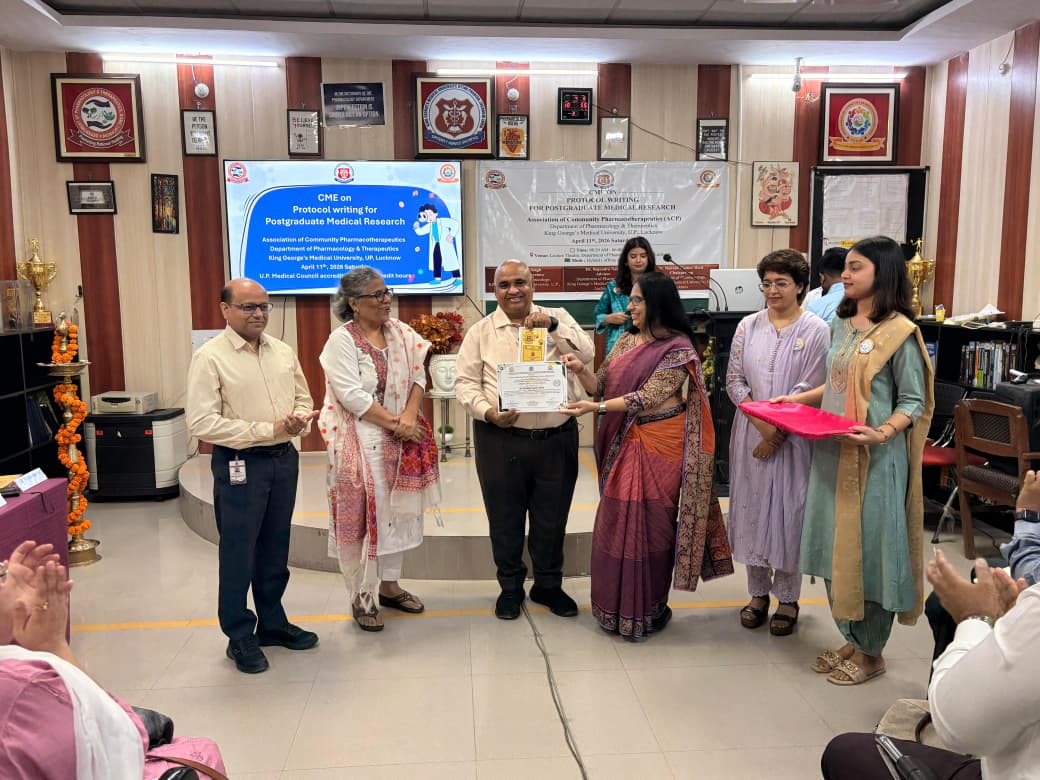
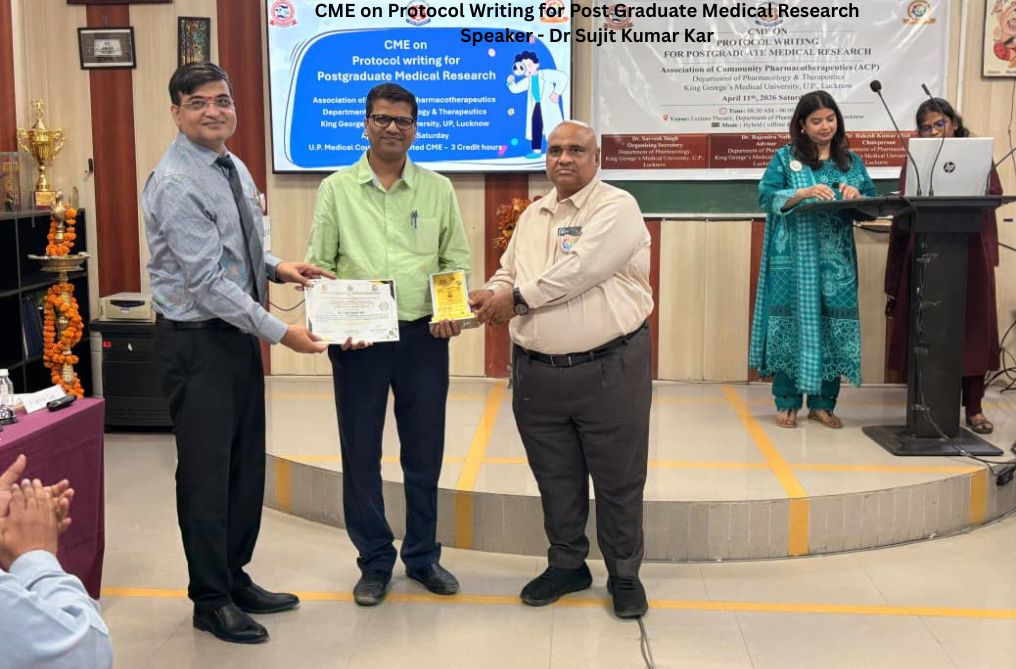
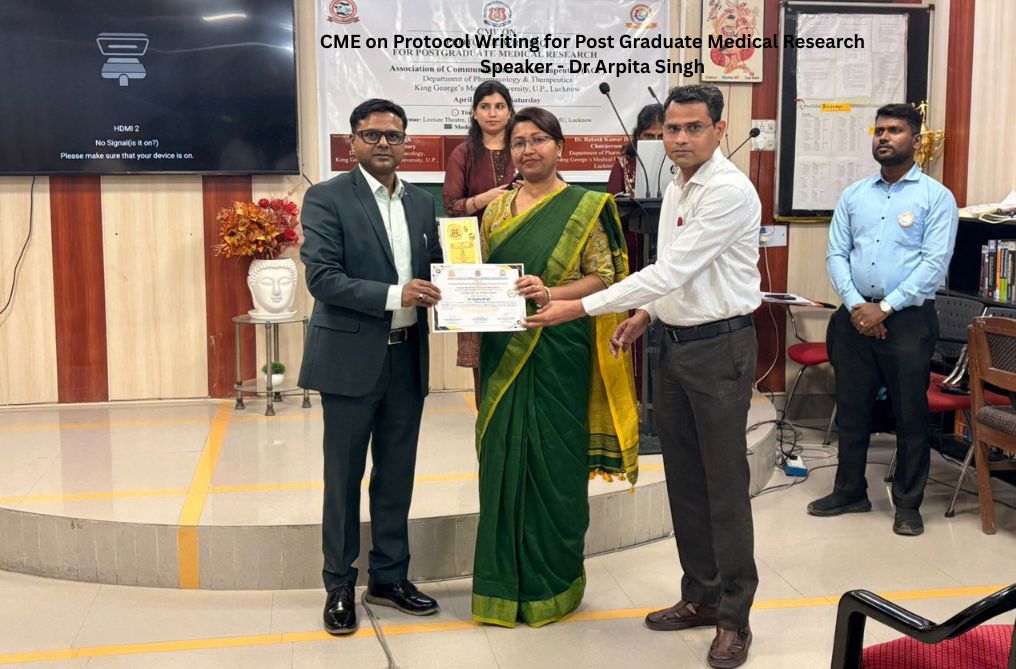
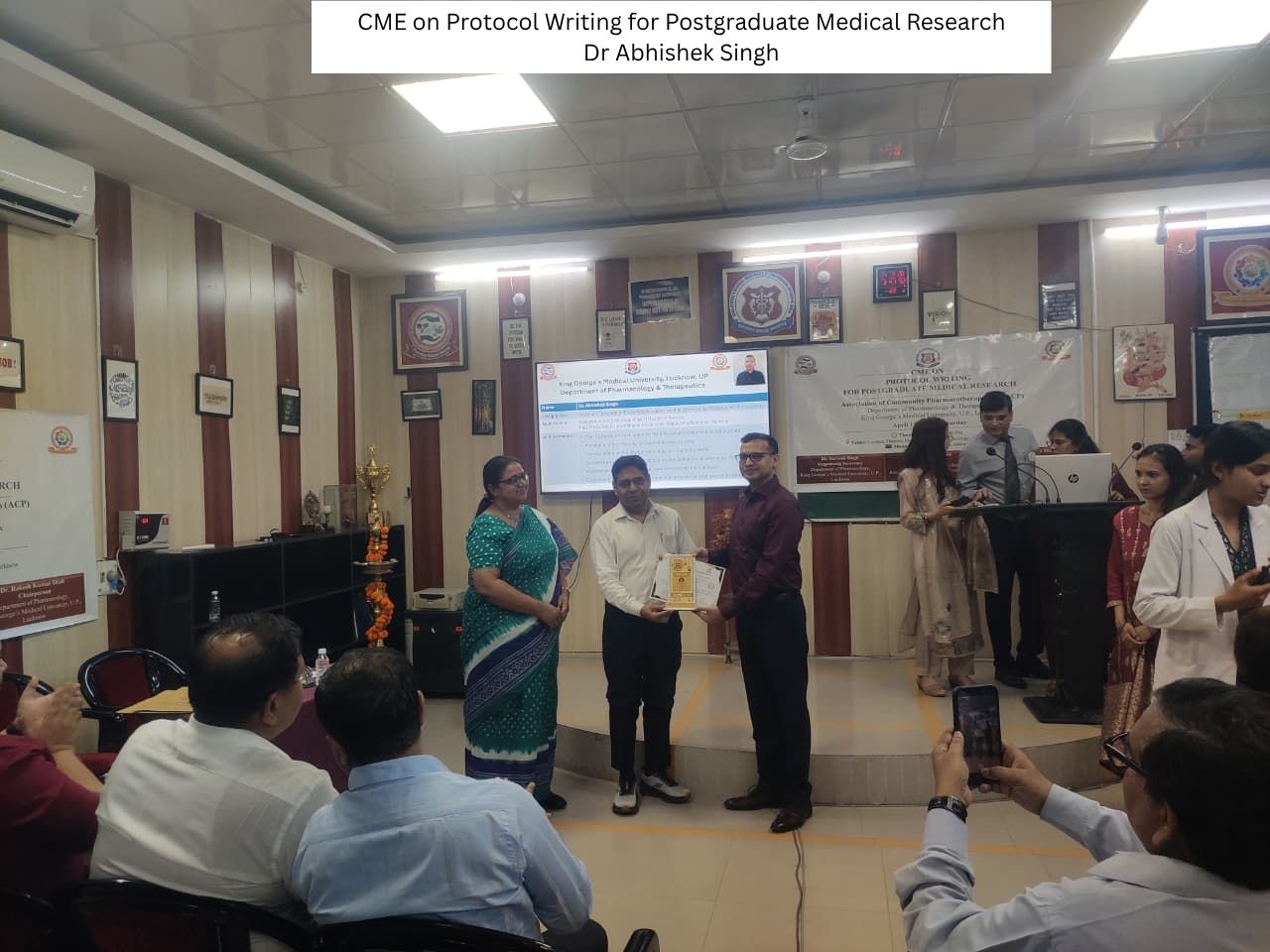
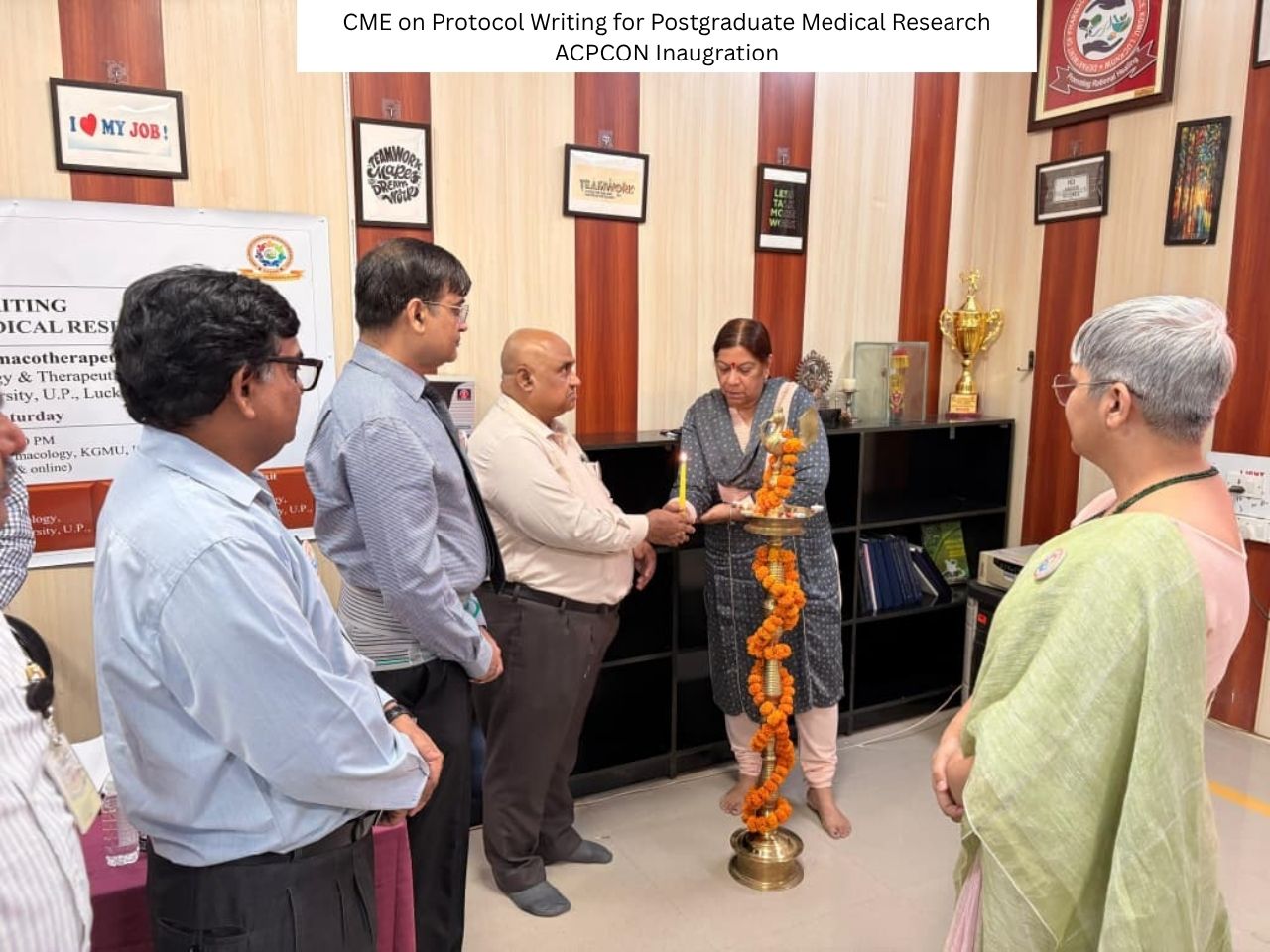
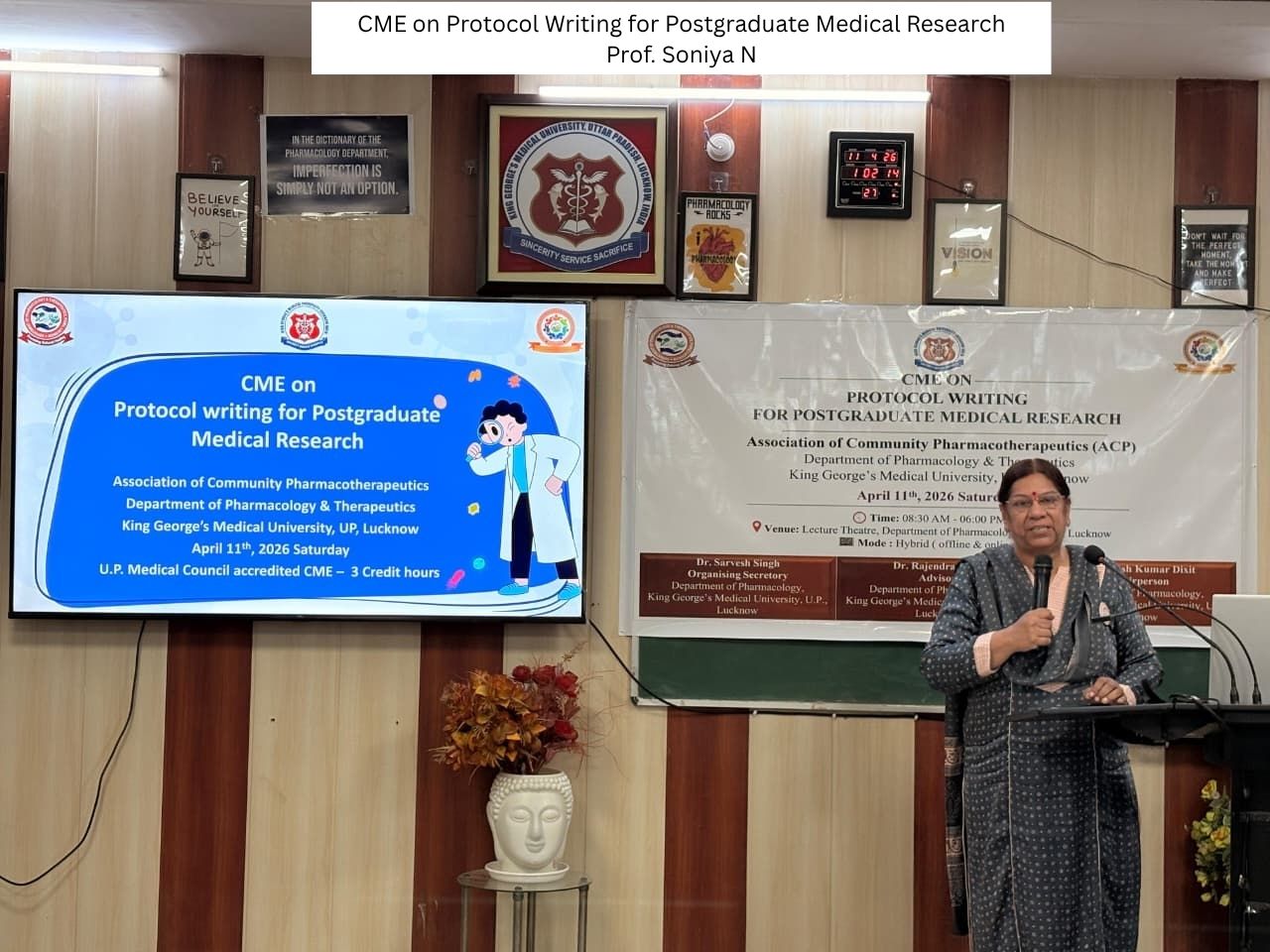
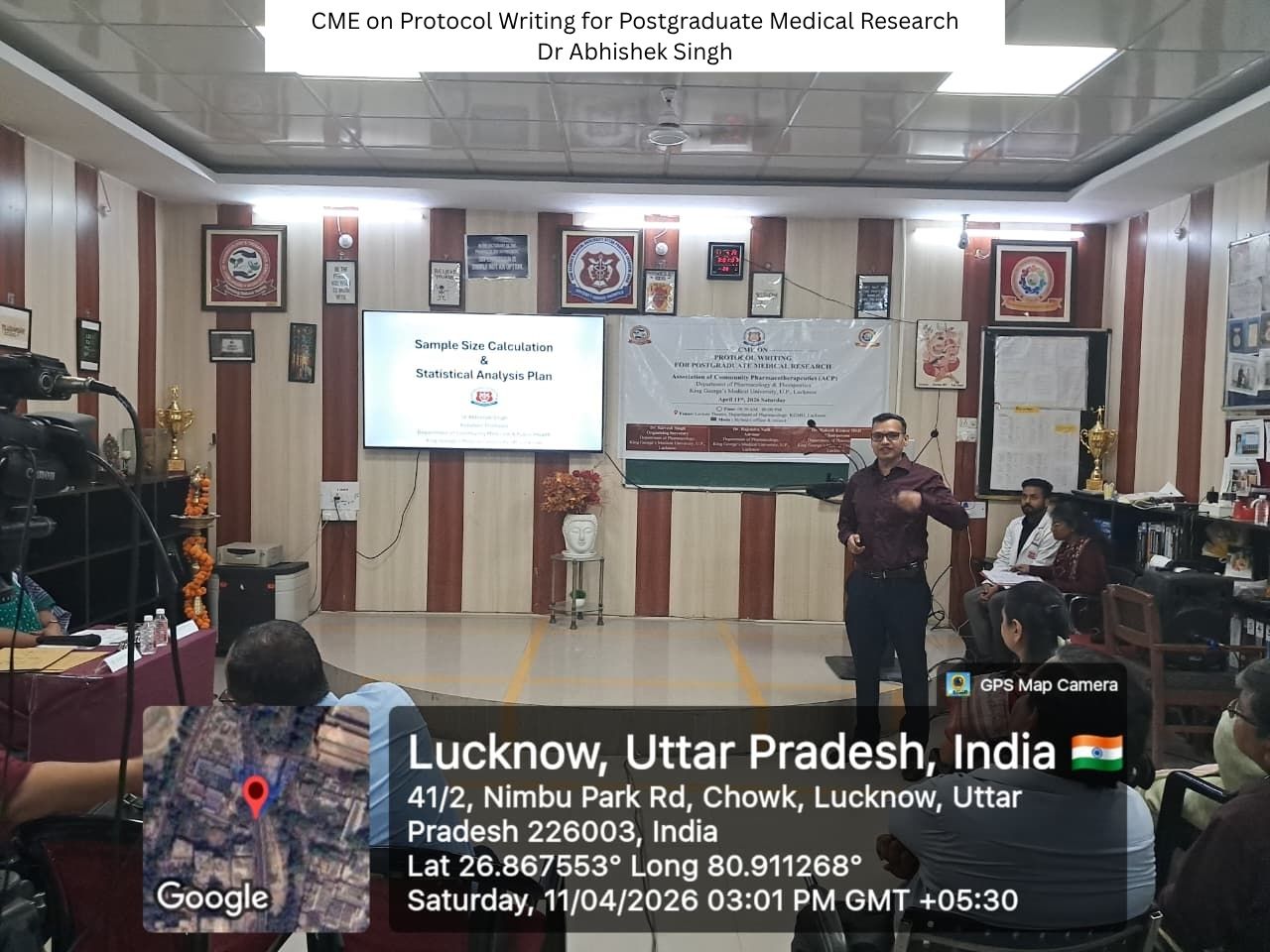
📌Click here to get the full CME recording📹
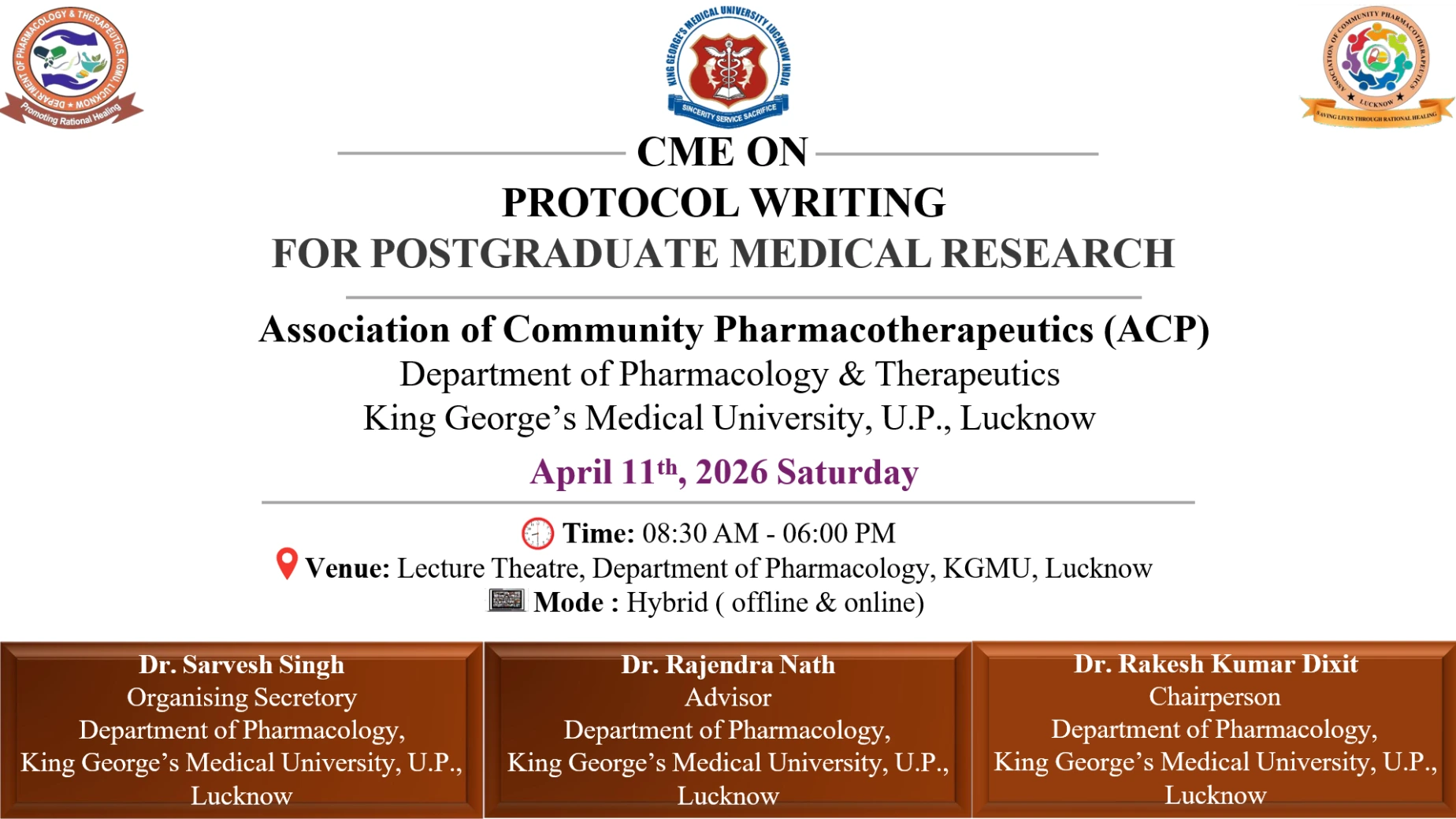
CME on Protocol Writing for Postgraduate Medical Research
Association of Community Pharmacotherapeutics, King George's Medical University, UP, Lucknow
📅 11 April 2026 (Saturday)⏰08:30 AM – 06:00 PM💻 Mode: Hybrid (Offline & Online)
📍 Department of Pharmacology & Therapeutics, KGMU
Target Audience - Postgraduate medical students/Undergraduate medical students/PhD scholars /Faculty/Clinicians/Researchers
💡About the CME
Participants will gain a step-by-step theoretical and practical understanding of protocol writing and research methodology, including formulation of research questions, literature search using PubMed and MeSH, critical appraisal and identification of research gaps, development of study objectives and hypotheses, study design selection, sample size calculation with statistical planning, methodology writing, referencing and citation (including Zotero), ethical considerations with IEC approval, and protocol writing with common pitfalls.
Registration Details:
Free for ACP Members
₹500 for Non-ACP Members
Last date of registration: 05/04/2026
NOT AN ACP MEMBER YET?
Become an ACP Member to attend this CME free and enjoy priority access, discounts or free registration for upcoming monthly ACP CMEs
Membership Options:
- Life Membership (For DM, DM, PhD, MSc in Pharmacology): ₹2000
- Associate Membership (For any academic achievement/Degree/Diploma): ₹1000
- Annual Membership: ₹500
ACP Membership Registration Link:
👉https://docs.google.com/forms/d/e/1FAIpQLSfeu5Cnb0NGf4REGPM6DnUQiDdTgK8wrtR17ThbAVemNryvfg/viewform
Kindly fill out the Google Form after registration:
https://forms.gle/ZNNFMuf2hFHAMzjZA
CME Schedule
| Time | Topic / Session | Speaker(s) |
|---|---|---|
| 08:15 – 08:30 | Registration | |
| 08:30 – 08:35 | Pre-Test | |
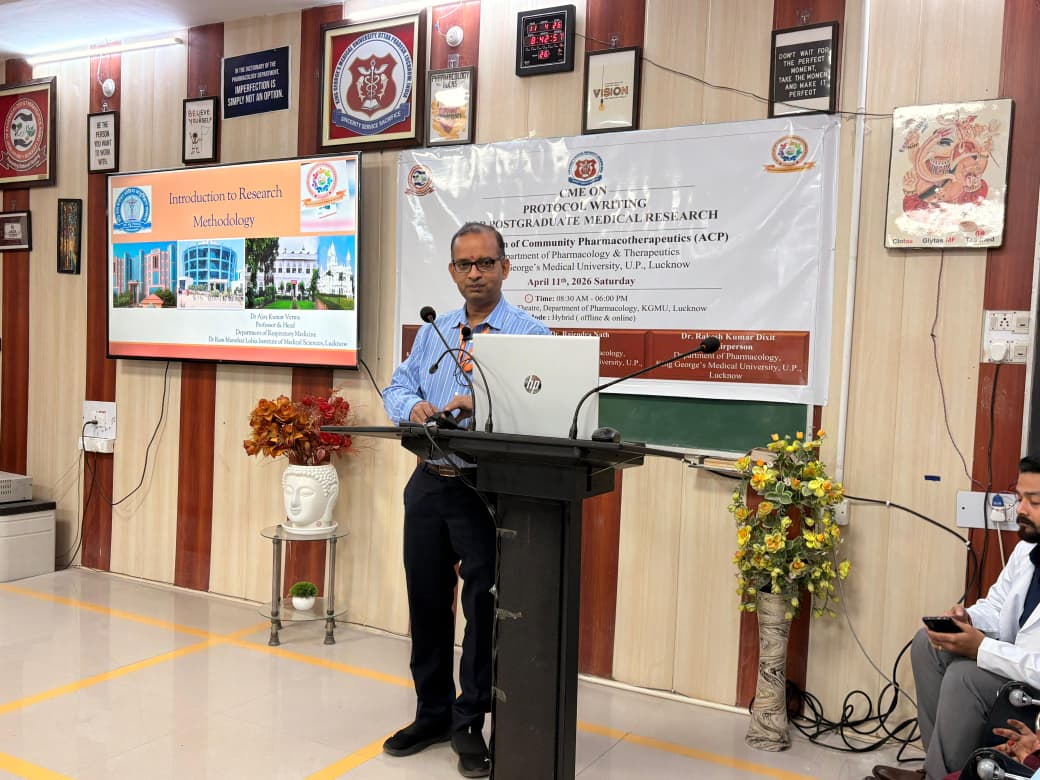
| 08:35 – 09:10 | Introduction to Research Methodology | Dr Ajay Kumar Verma (Professor & Head, Respiratory Medicine, RMLIMS, Lucknow) |
| 09:10 – 09:40 | Formulating a Research Question | Dr Sachchidanand Tewari (Associate Professor, Pharmacology, AIIMS Raebareli) |
| 09:40 – 10:10 | Literature Search using PubMed and MeSH Terms | Dr Rakesh Kumar Dixit (Professor & Head, Pharmacology, KGMU, Lucknow) |
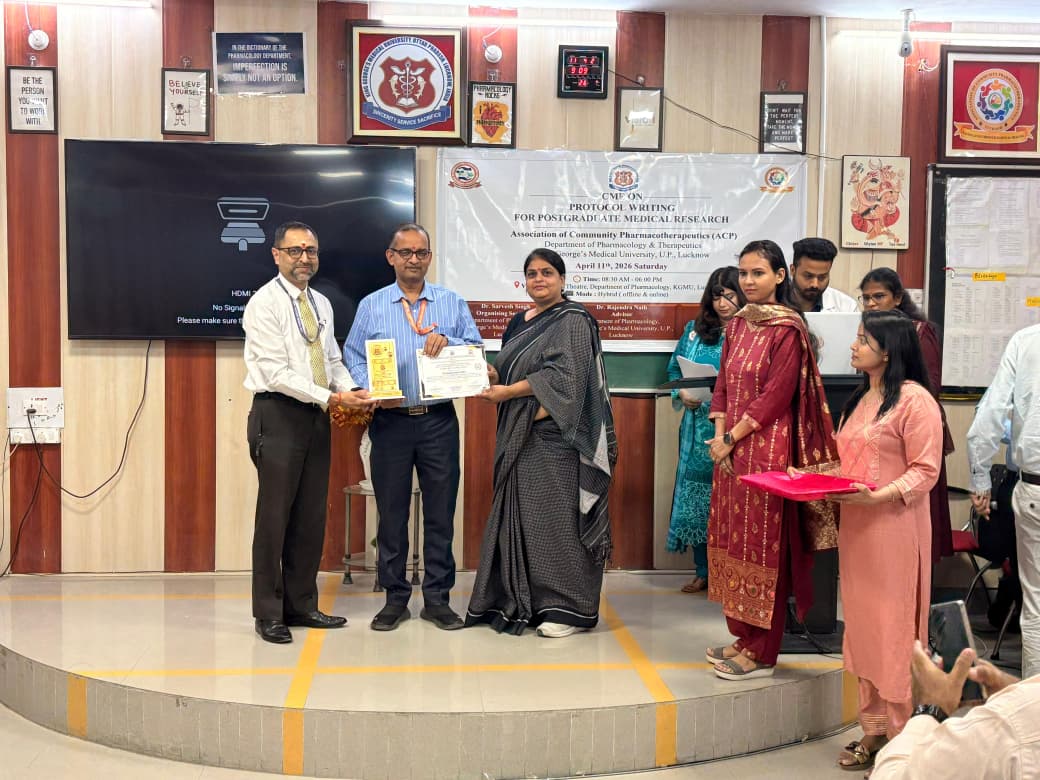
| 10:10 – 10:30 | Inaugural Session | |
| 10:30 – 10:40 | Tea Break | |
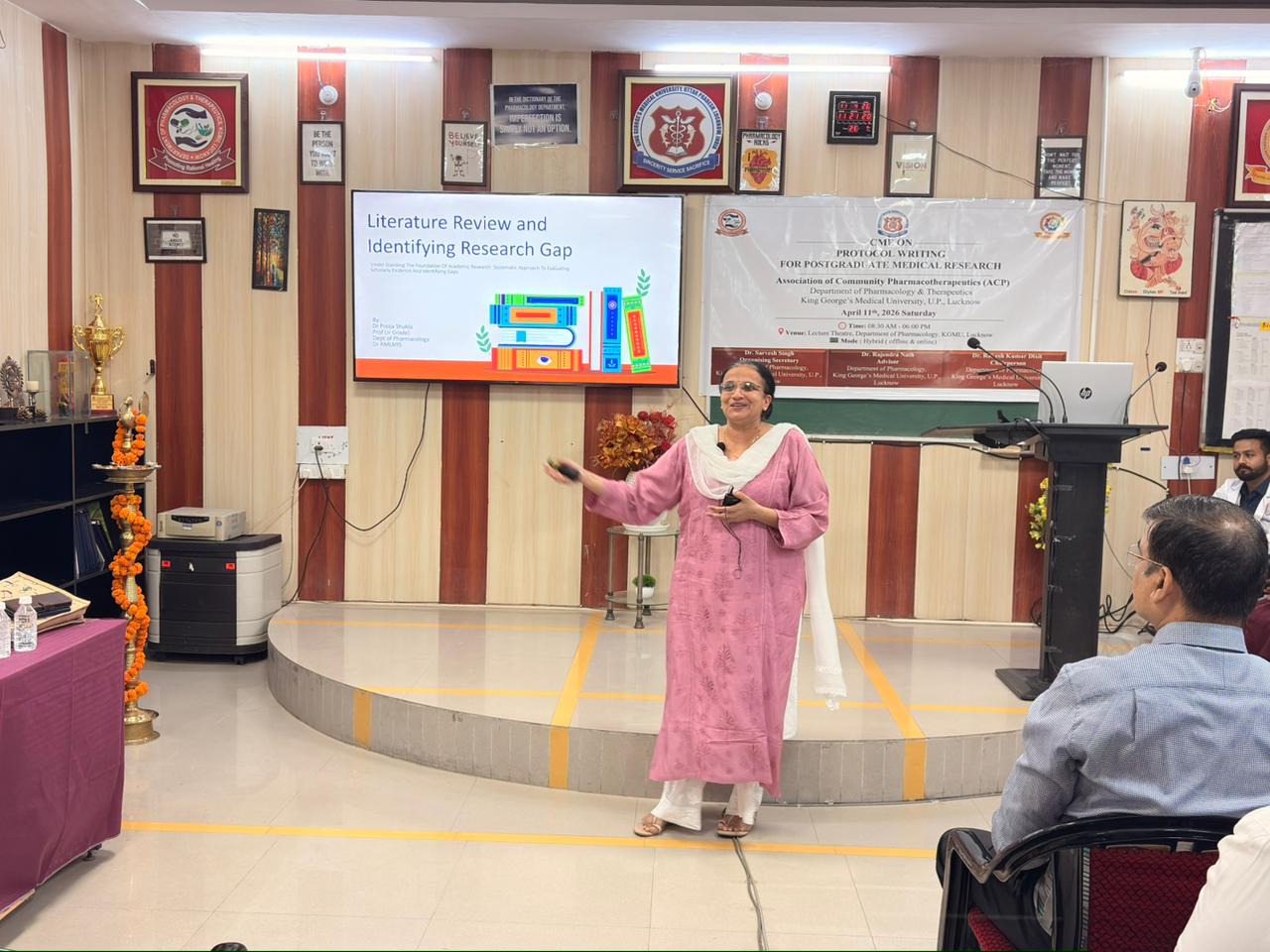
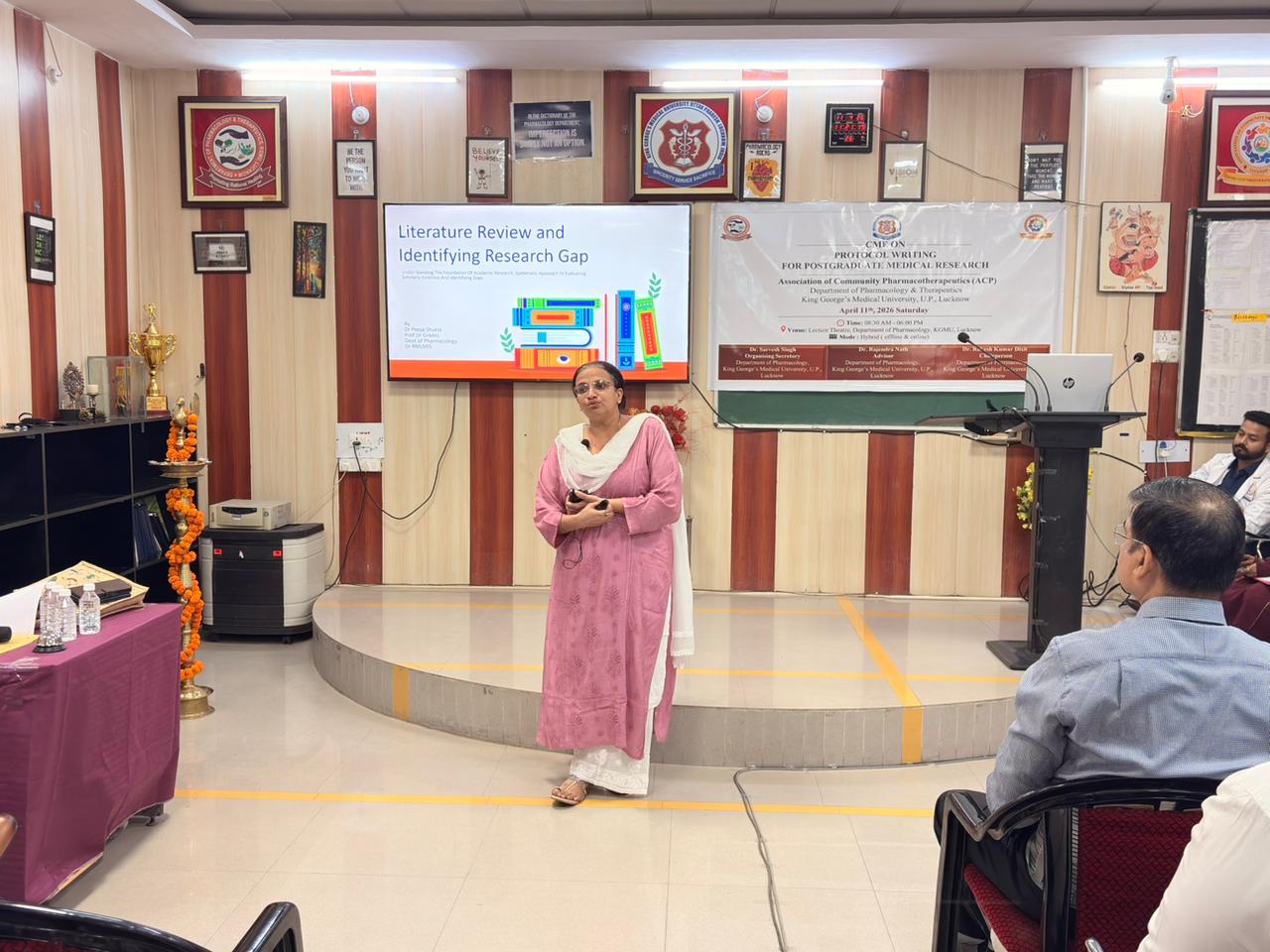
| 10:40 – 11:10 | Literature Review and Identifying Research Gap | Dr Pooja Shukla (Professor, Pharmacology, RMLIMS, Lucknow) |
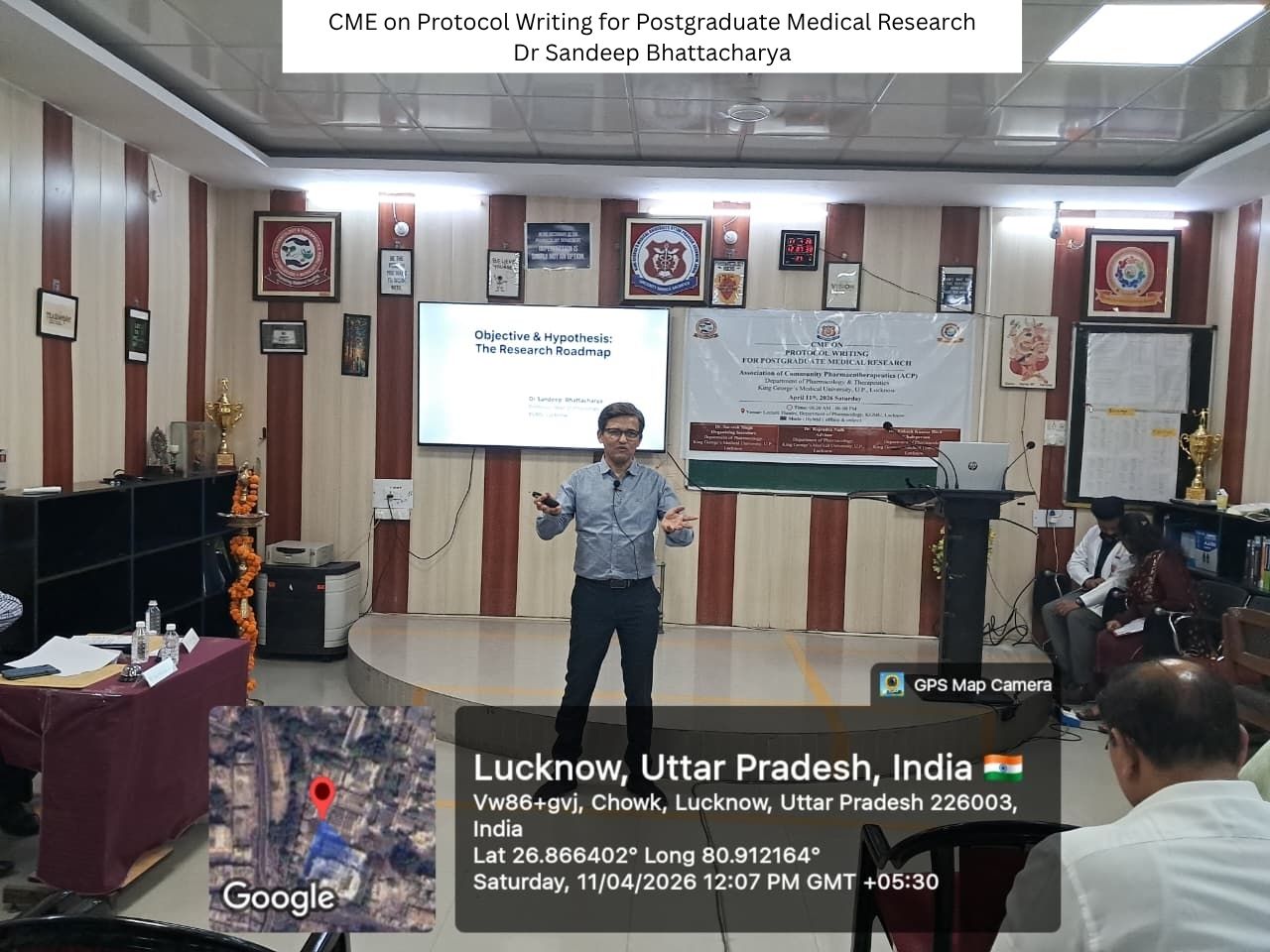
| 11:10 – 11:55 | Study Objectives and Hypothesis | Dr Sandeep Bhattacharya (Professor, Physiology, KGMU, Lucknow) |
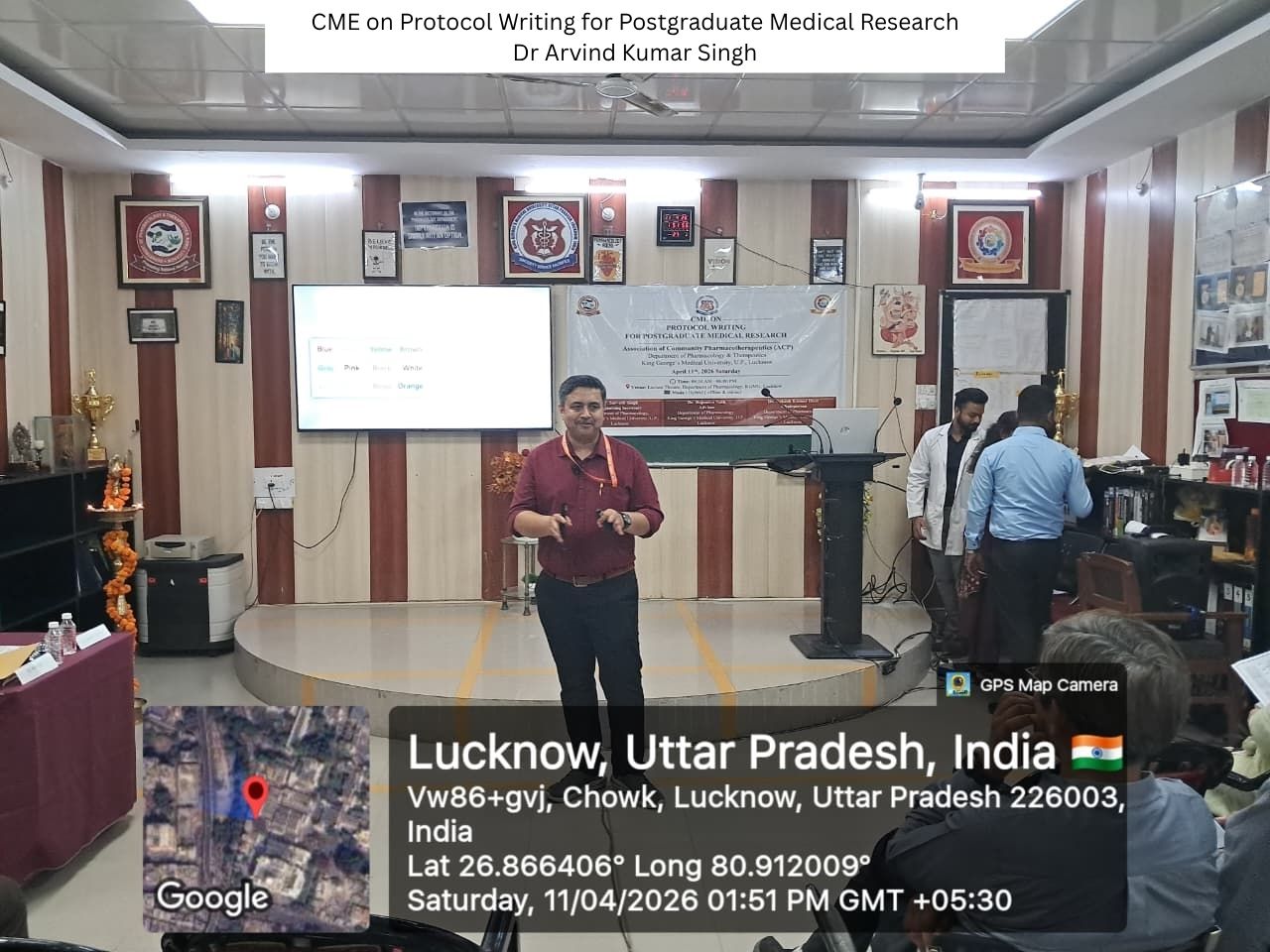
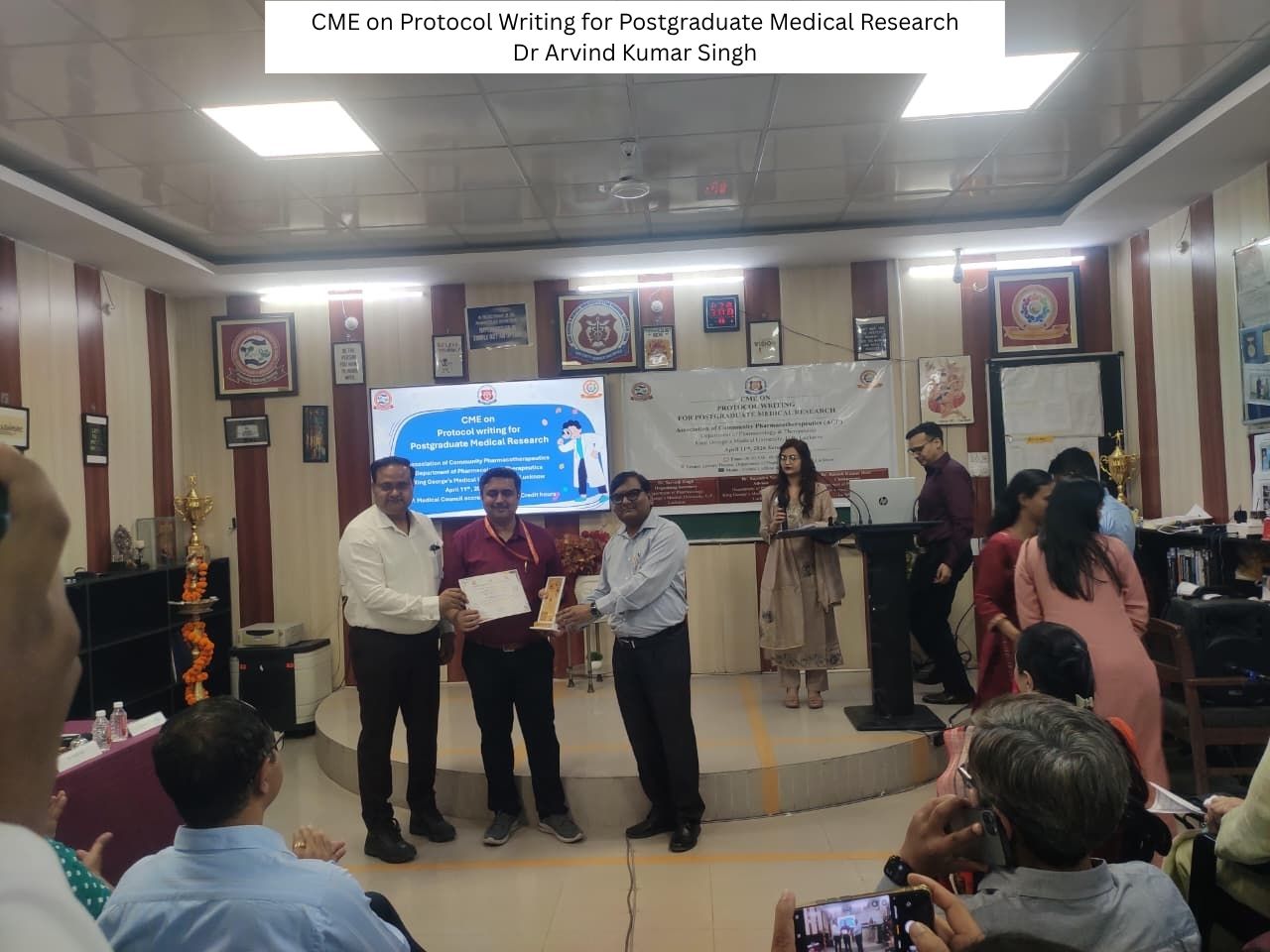
| 11:55 – 12:40 | Study Design Selection | Dr Arvind Kumar Singh (Professor, Community Medicine, RMLIMS, Lucknow) |
| 12:40 – 01:25 | Sample Size Calculation and Statistical Action Plan | Dr Abhishek Singh (Statistician & Assistant Professor, Community Medicine, KGMU, Lucknow) |
| 01:25 – 02:05 | Lunch Break | |
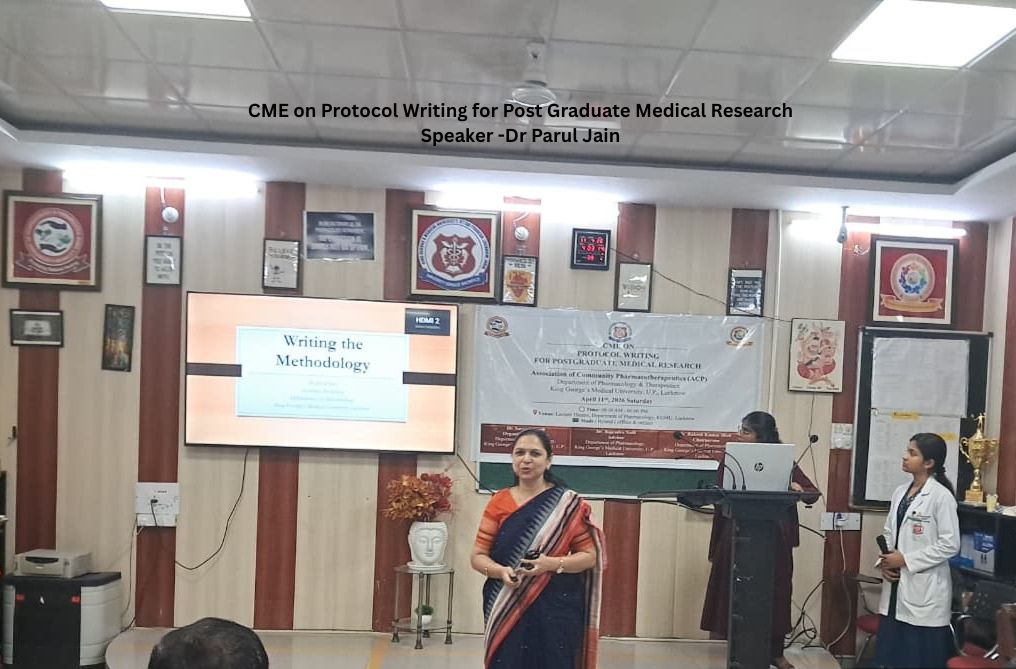
| 02:05 – 02:50 | Writing the Methodology | Dr Parul Jain (Professor, Microbiology, KGMU, Lucknow) |
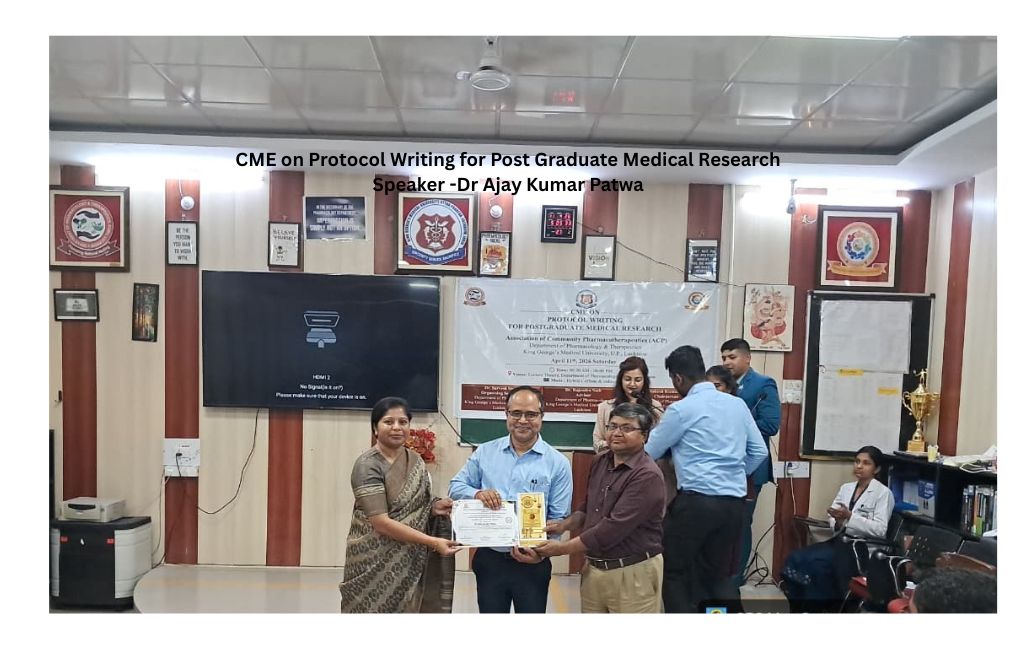
| 02:50 – 03:35 | Referencing and Citation | Dr Ajay Kumar Patwa (Professor, Medicine, KGMU, Lucknow) |
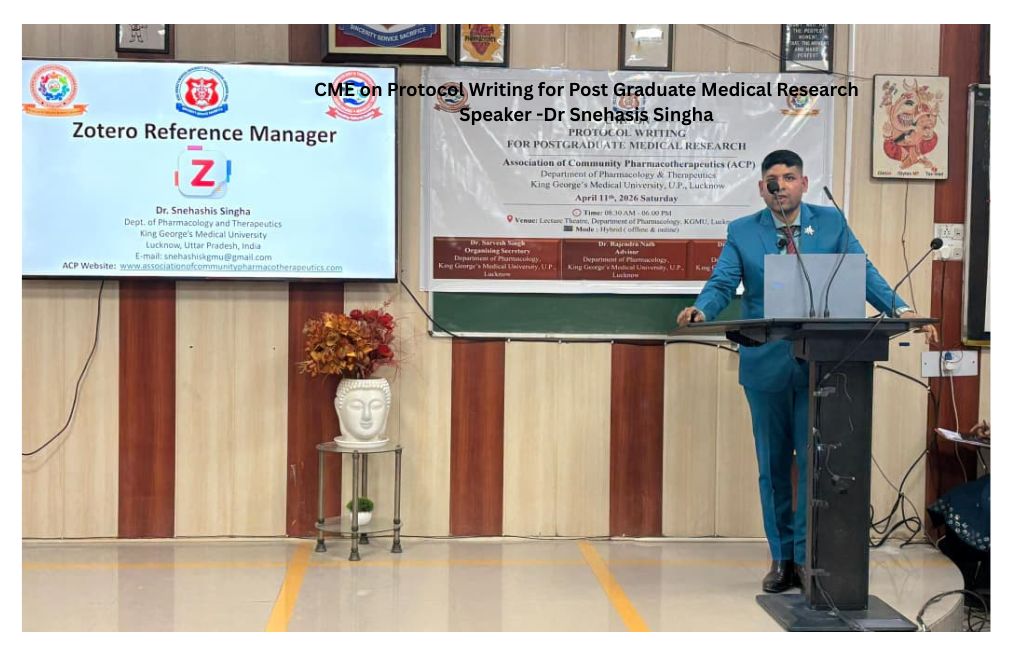
| 03:35 – 04:10 | Hands-on Demonstration: Zotero | Dr. Ajay Kumar Patwa, Dr Fatima Rani,Dr Snehashis Singha, Dr Karan Suneja, Dr Siddhant Mehrotra, Dr Shankar Gejji |
| 04:10 – 04:20 | Tea Break | |
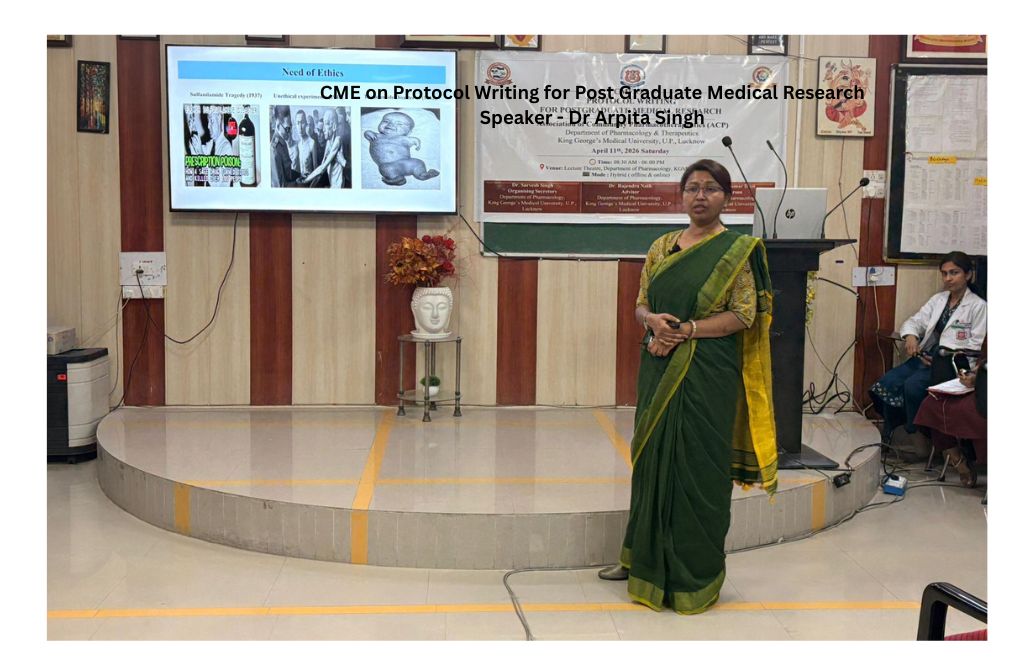
| 04:20 – 05:10 | Ethical Considerations and IEC Approval | Dr Arpita Singh (Professor & Head, Pharmacology, RMLIMS, Lucknow) |
| 05:10 – 05:50 | Protocol Writing Format and Common Mistakes | Dr Jyoti Chopra (Professor, Anatomy, KGMU, Lucknow) |
| 05:50 – 06:00 | Vote of Thanks | Dr Rakesh Kumar Dixit (Professor & Head, Pharmacology, KGMU, Lucknow) |
Kindly bring your laptop for hands-on
Objectives
By the end of the CME, participants will be able to:
Understand the components of a thesis protocol.
Formulate a clear research question using FINER and PICO principles.
Design appropriate study methodology (study design, sample size, inclusion–exclusion criteria).
Develop a statistical analysis plan.
Prepare documents required for Institutional Ethics Committee (IEC) submission.
Identify common mistakes in protocol writing and strategies to avoid them.
Key Topics Covered
Structure of a research protocol
Framing research questions and hypotheses
Review of literature and referencing (Vancouver style)
Study designs in clinical and experimental research
Sample size calculation and power analysis
Randomisation, blinding, and bias minimisation
Data collection tools and validation
Basics of biostatistics relevant to protocol writing
Ethical considerations and informed consent
Timeline (Gantt chart) and budgeting